

Solar panels need very little maintenance. Solar panels on most homes in Northern Ireland need an annual service, a quick monthly look at the monitoring app, and only an occasional clean as our rainfall does most of the cleaning for you!
Do solar panels need maintenance?
Yes, solar panels do need maintenance, but not much. Solar panels have no moving parts, so there is nothing to wear out in the panels themselves. The maintenance that matters is mostly about everything around them - the inverter, the battery, the roof fixings and your monitoring app.
Solar panels don't suddenly stop working due to a fault, usually a fault will go unnoticed and then cause problems down the line.
For example, an inverter that stops working in March may not be spotted until your summer electricity bill arrives, by which point you have lost a full season of generation. That’s why a monthly glance at your app is the single most valuable thing you can do.
Your solar panel maintenance checklist
To help you keep on top of solar panel maintenance, here are six checks that cover almost everything your domestic solar system needs.
1. Once a month, check your solar app.
On your chosen solar app, confirm your solar panels are generating electricity and there are no error messages. This only takes a minute, and it can catch faults before they cost you a season.

2. Every few months, check from ground-level.
Go outside and check how your solar panels look from ground level. Look for dirt, moss creeping along the panel edges, bird droppings, or anything that has come loose. Binoculars can be useful for this.
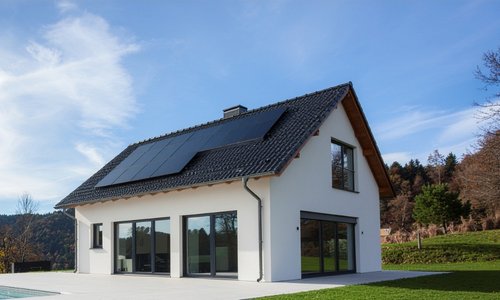
3. Once a year, book an annual service.
Once a year, book an annual service with an accredited installer, like Refresh NI. They test the electrics, check the fixings, review your inverter and battery settings and confirm the system is performing as it should.
4. After stormy weather, do a visual check.
Northern Ireland gets its share of storms - January 2026 was our wettest January in 149 years! After bad weather, check for slipped panels, debris or damaged roof tiles. Call your installer if anything seems off.
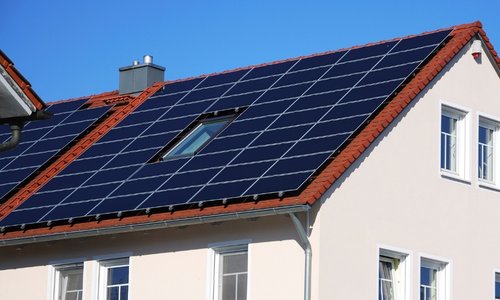
5. In spring, watch for birds
From March to May in Northern Ireland, it’s common for birds to nest in the warm, sheltered gap under solar panels. Their nesting material blocks airflow and droppings are one of the worst things for solar panel output.
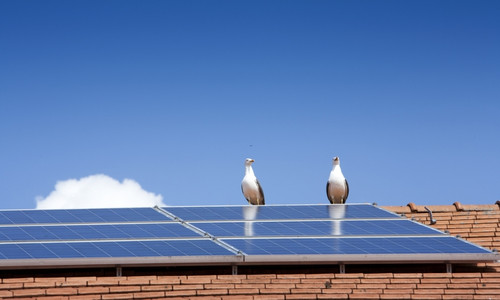
6. Keep your paperwork together
This isn’t a “check” but it’s an important point - keep your MCS certificate, handover pack, NIE Networks registration and service records all in one place. You will need them for a warranty claim or when you sell your home.

Do solar panels need cleaning?
Solar panels in Northern Ireland do require cleaning, but not as much as people expect. If your system is pitched on a standard sloped roof (sitting at 30 to 40 degrees) rain runs down the glass and carries loose dust and pollen with it. In Northern Ireland, most roofs sit at this angle and it rains often enough that many homes never pay for a clean at all.
However, solar panel cleaning is worth doing when rain cannot shift what is on the glass. That could mean things like:
- Bird droppings, which block light completely and do not wash off in rain.
- Moss and lichen creeping in from the panel edges
- Tree sap, leaves and blossom if you have anything overhanging the roof.
- Salt film, if you live along the Northern Ireland coastline
- Dust and grime from farms, construction sites, or nearby roads.
There is a trade-off in Northern Ireland’s climate that most solar advice misses. Our frequent rainfall means dust and pollen rarely build up the way they do in drier parts of the UK, so panels here need cleaninxg less often than general UK guidance suggests.
But the same mild, damp conditions are ideal for moss, lichen and algae, which take hold on panel edges and frames far more readily here, and rain will not shift any of it.
In Northern Ireland, biological growth is the cleaning issue that matters, not dust.
-
How often should you clean solar panels?
For most Northern Ireland homes, we’d advise cleaning your solar panels once every two to three years.
If your panels are located on a low-pitch or flat roof, we’d advise cleaning them once a year. If your property is located beside trees, farmland, busy roads or the coast, you could also benefit from an annual clean.
The best time of year for cleaning them is late spring, once the pollen has settled and before the long summer generating days. -
How to clean solar panels from the ground
If your panels are on a single-storey roof, you can clean them yourself from the ground. You can clean solar panels yourself as long as you are careful and follow the guidelines for cleaning, making sure to check what invalidates the solar panels warranty.- Check your output first so you can tell afterwards whether the clean actually made a difference
- Pick a cool, overcast day. Never clean panels when the glass is hot. Cold water on hot glass causes thermal shock, which can create microcracks in the cells. These cracks won’t be visible, but they’re permanent and are unlikely to be covered by warranty.
- Shut the system down following the instructions in your handover pack.
- Rinse with plain, cool water first to lift loose grit, so you are not dragging it across the glass.
- Use a soft-bristle brush on a telescopic water-fed pole, working gently down the panel rather than in circles. Deionised or purified water dries without leaving mineral spots.
- Rinse again and let the panels air dry. No wiping, no squeegee. Check your output again a day or two later.
-
How much does solar panel cleaning cost?
In 2026, professional solar panel cleaning in Northern Ireland typically costs anywhere from £80 to £200 for a standard domestic system. Some cleaners offer annual contracts at a reduced rate, so it’s worth shopping around.
Due to access requirements, bungalows can expect to pay much less than two-story buildings or higher.
Do solar panels need servicing?
Yes, an annual service is recommended for domestic solar panels, and it matters more than cleaning does. A service checks the parts of your system you cannot see and cannot safely inspect yourself.
Many manufacturers also require evidence of professional servicing before they will honour a warranty claim, and an annual service report is that evidence. Home insurers increasingly ask the same question after a fire or storm claim involving solar panels.
-
How often should solar panels be serviced?
Once every 12 months is the standard recommendation, with a deeper electrical safety inspection every five years. Book an unscheduled visit sooner if your generation drops noticeably, your inverter shows an error, or your system has been through a serious storm. -
What’s included in a Solar Panel Service?
A proper domestic panel service takes around two hours and should produce a written report you can keep. This report will usually cover:- A visual inspection of the panels, mountings, fixings and roof penetrations
- An inverter health check and error log review
- Generation output measured against the expected yield for your system
- DC isolator, connector and earth bond testing
- A battery state-of-health check if you have one
- A review of your monitoring and app settings.
Solar panel maintenance costs
Expect to spend £150 to £250 a year maintaining a domestic solar system in Northern Ireland - and in many years you will spend nothing beyond the annual service.
| Maintenance | Est. cost | How often |
|---|---|---|
| Annual service | £180 + VAT (Refresh NI) | Once a year |
| Professional clean | £80-£200 | Every 2-3 years, if needed |
| Moss or lichen removal | £50-£150 on top of a standard clean | As needed |
| Bird proofing (mesh) | £600-£1000 | One-off |
| Inverter replacement | £900-£1200 | One-off |
If you are having a service done anyway, ask whether a clean can be added to the same visit, as one trip and one set-up means a lower total cost. The inverter is the real long-term expense, because panels are warranted for decades and inverters generally are not, so factor one replacement into your thinking.
Solar panel warranties and aftercare
Solar panel “aftercare" is the support you get from your installer once the job is finished. Aftercare includes your warranty cover, help when something goes wrong, and someone to call. Maintenance is the practical upkeep.
Refresh NI "Our commitment doesn't end when the installation is complete. Solar is a long-term investment, and protecting it requires proper maintenance planning. Whether we installed a system or not, we’re here to help customers navigate panel and inverter warranty claims, plan maintenance and keep your system performing at its best."
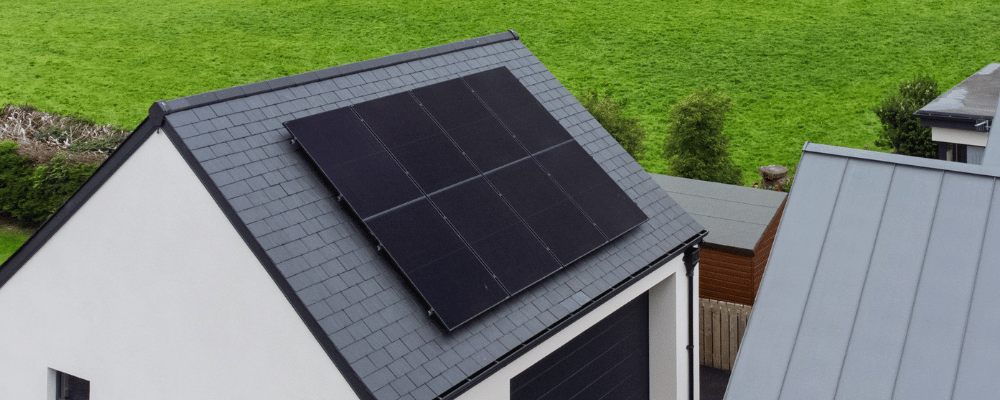
What most people don’t know is that solar panels are covered by several different warranties from different parties that run for different lengths of time. The exact terms depend on who installed your system and which products they used.
Panel product and performance warranties
Two warranties cover the panels themselves. A product warranty covers manufacturing defects. A performance warranty guarantees a minimum output as the panels age, because panels do not fail at a fixed date, they gradually produce a little less each year. These are usually your longest-running cover.
Inverter and battery warranties
These are almost always shorter than your panel cover, and a battery warranty will be defined by cycle life as well as years. Both are worth checking, because the inverter is the component most likely to need replacing during the life of your system.
Workmanship warranty
This is the one people overlook. It covers the installation itself, including the fixings, the wiring and the roof penetrations. Many post-installation problems are installation issues rather than product faults: a roof leak around a fixing is not a panel defect, and it is the workmanship cover that deals with it.

Your aftercare is covered
Solar panels and battery storage installed through Power NI are fitted by our local partner, Refresh NI, and come with full manufacturer and workmanship cover as standard, along with aftercare from a team based in Northern Ireland.
Get your solar quoteFAQs
-
What is “bird-proofing” for solar panels?
Bird proofing is a mesh fitted around the edge of solar panels to stop birds getting into the gap underneath. It typically costs between £600 and £1,000 as a one-off, and it is the only permanent fix, as clearing a nest out simply means the birds come back the following spring.
Under the Wildlife (Northern Ireland) Order 1985 it is an offence to damage or disturb a nest while it is being built or in use, so if birds have already nested you will need to wait until the young have fledged. Autumn and winter are the windows for getting mesh fitted. -
What can invalidate a solar panel warranty?
- Pressure washing or abrasive cleaning
- Physical damage from walking on the panels
- Unauthorised electrical work
- Moving, removing or refitting panels without telling your installer
- Missing paperwork - because your MCS certificate, handover pack, NIE Networks registration and service records are what any claim will be assessed against.
-
Does solar panel maintenance affect my export payments?
If your system stops generating, you stop exporting, so keeping it running is what protects your income. You do not need to tell us about routine cleaning or servicing. You would need to let us know if the size of your system changes. You can find our current rates on our microgeneration tariff rates page. -
How long do solar panels last?
Most panels are expected to generate for 25 to 30 years, and often longer. They do not stop working at 25, they gradually produce a little less each year, which is what a performance warranty covers. Your inverter is likely to need replacing before your panels do. -
How can you look after a solar panel battery?
There are no user-serviceable parts inside a solar battery and the unit should never be opened. But you can:- Keep the area around it clear, because batteries need airflow to manage their own temperature.
- Review your charge settings once a year, as the settings that suited you at installation may not be earning you as much if your routine has changed.
- Watch the app for changes in behaviour, because a battery that stops holding charge the way it used to is worth a conversation with your installer.